Tech
We summarize the week's scientific breakthroughs every Thursday.
- Artificial Intelligence
As teens in crisis turn to AI chatbots, simulated chats highlight risks
From blaming the victim to replying "I have no interest in your life" to suicidal thoughts, AI chatbots can respond unethically when used for therapy.
- Chemistry
A new AI technique may aid violent crime forensics
An AI tool trained on chemical signatures from corpse-eating insects may help determine time and place of death for victims of violent crimes.
- Artificial Intelligence
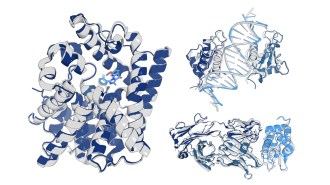
The AI model OpenFold3 takes a crucial step in making protein predictions
The open-source AI model improves transparency in predicting how proteins interact with other molecules, which could speed up drug discovery.
- Artificial Intelligence
A conference just tested AI agents’ ability to do science
AI promises to speed up scientific analysis and writing. However, AI agents struggled with accuracy and judgment.
- Artificial Intelligence
Biased online images train AI bots to see women as younger, less experienced
Age and gender bias in online images feeds into AI tools, revealing stereotypes shaping digital systems and hiring algorithms, researchers report.
- Artificial Intelligence
AI-designed proteins test biosecurity safeguards
AI edits to the blueprints for known toxins can evade detection. Researchers are improving filters to catch these rare biosecurity threats.
- Genetics
AI generated its first working genome: a tiny bacteria killer
Bacteriophages designed with AI kill E. coli faster than a well-studied strain, but the tech needs regulation before moving beyond lab dishes.
- Health & Medicine
Can AI spot harmful health side effects on social media?
A new AI tool discovers harmful side effects of cannabis products from Reddit posts. Public health workers could use this info to help keep people safe.
- Tech
This experimental computer chip reuses energy
A first-of-its-kind test shows that reusing energy within a computer chip can work, thanks to two techy tricks.
- Earth
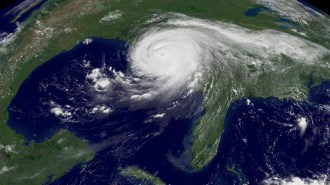
20 years after Hurricane Katrina, is the U.S. better prepared?
Hurricane forecasts have improved since Katrina, but risks from climate change and budget cuts loom.
- Artificial Intelligence
Can fake faces make AI training more ethical?
Demographic bias gaps are closing in face recognition, but how training images are sourced is becoming the field’s biggest privacy fight.
- Physics
Sunlight is all that’s needed to keep these tiny aircraft aloft
Sun-powered fliers could use photophoretic forces to hover in the mesosphere, gathering data from a region off limits to planes and balloons.